
The Work of AI in an Age of Creative Labor
by Aditi Dey, Sareeta Amrute, Andrew Shea, and Henry Schröder from the Lab for AI, Ethics and Creative Labor
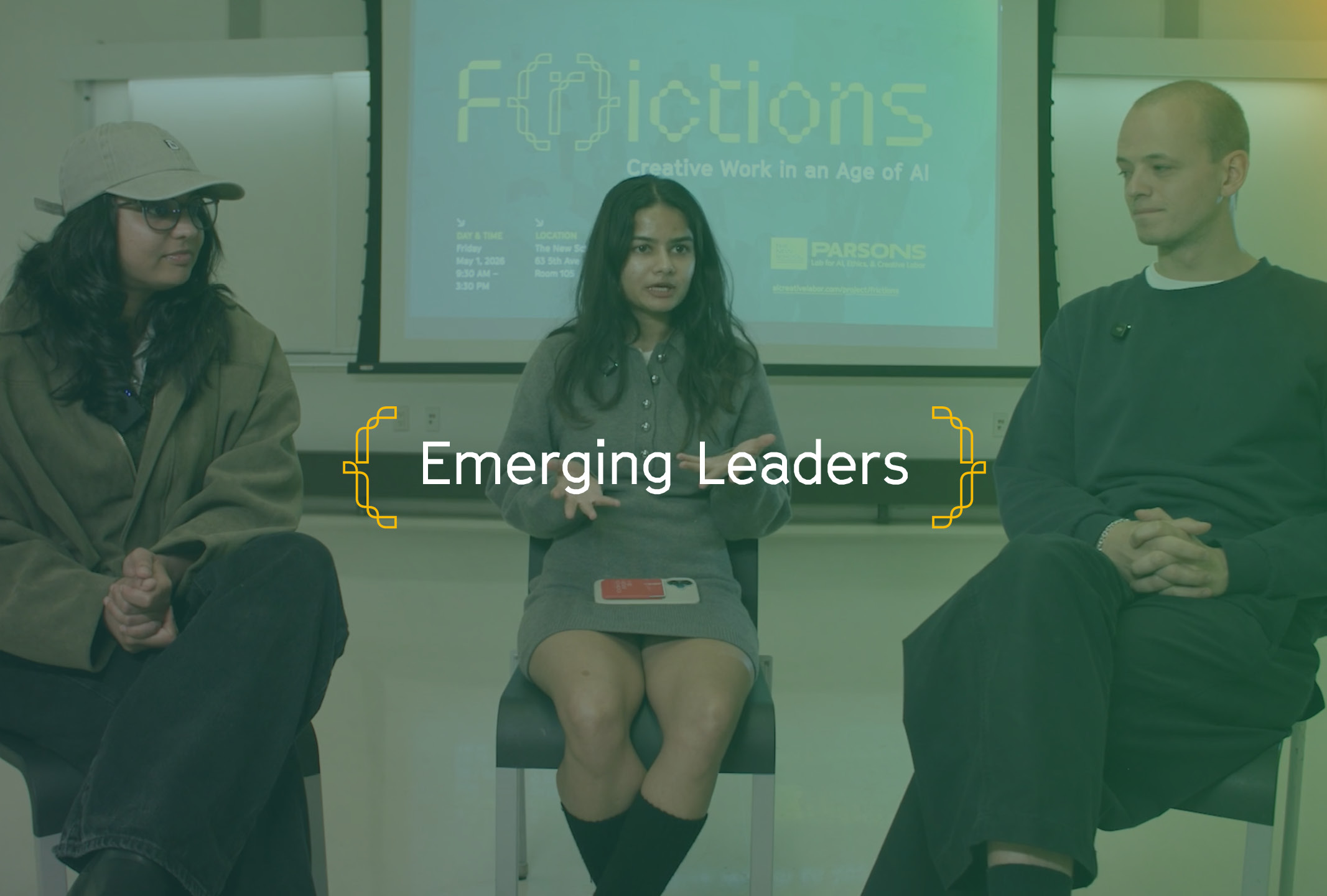
This summarizes a day of conversations about how AI is reshaping creative fields—from disappearing entry-level jobs to the limits of copyright—that took place at F(r)ictions: Creative Work in the Age of AI on May 1, 2026.
The scale of AI usage for imagery, designs, sound, and the written word is massive. As of 2023, one estimate suggests AI tools generate about 80 million images daily, while 300,000 AI-generated ebooks are published per month by the end of 2025, and often contain wholesale fabrications. The volume and speed of AI creative production have raised real challenges not only for reghttps://www.nytimes.com/2026/07/16/technology/ai-slop-books-biography-amazon.htmlulation in creative fields but also questions about authenticity, livelihood, and control at the heart of creative work. Copyright, the usual way creative work gets protected, may not be enough. For worker protections to succeed, they need to be both collective, and they need to reach the workers in other countries who do much of this work.
Art in the age of artificial intelligence has meant accelerated workflows, AI-slop art, and AI companies training their models on the creative work, without consent or providing compensation. The question of what real art really is has become more unsettled than ever, as synthetic media proliferates in our media environments. Creative fields often serve as bellwethers for shifts in labor, but these threats look and feel different in each field.
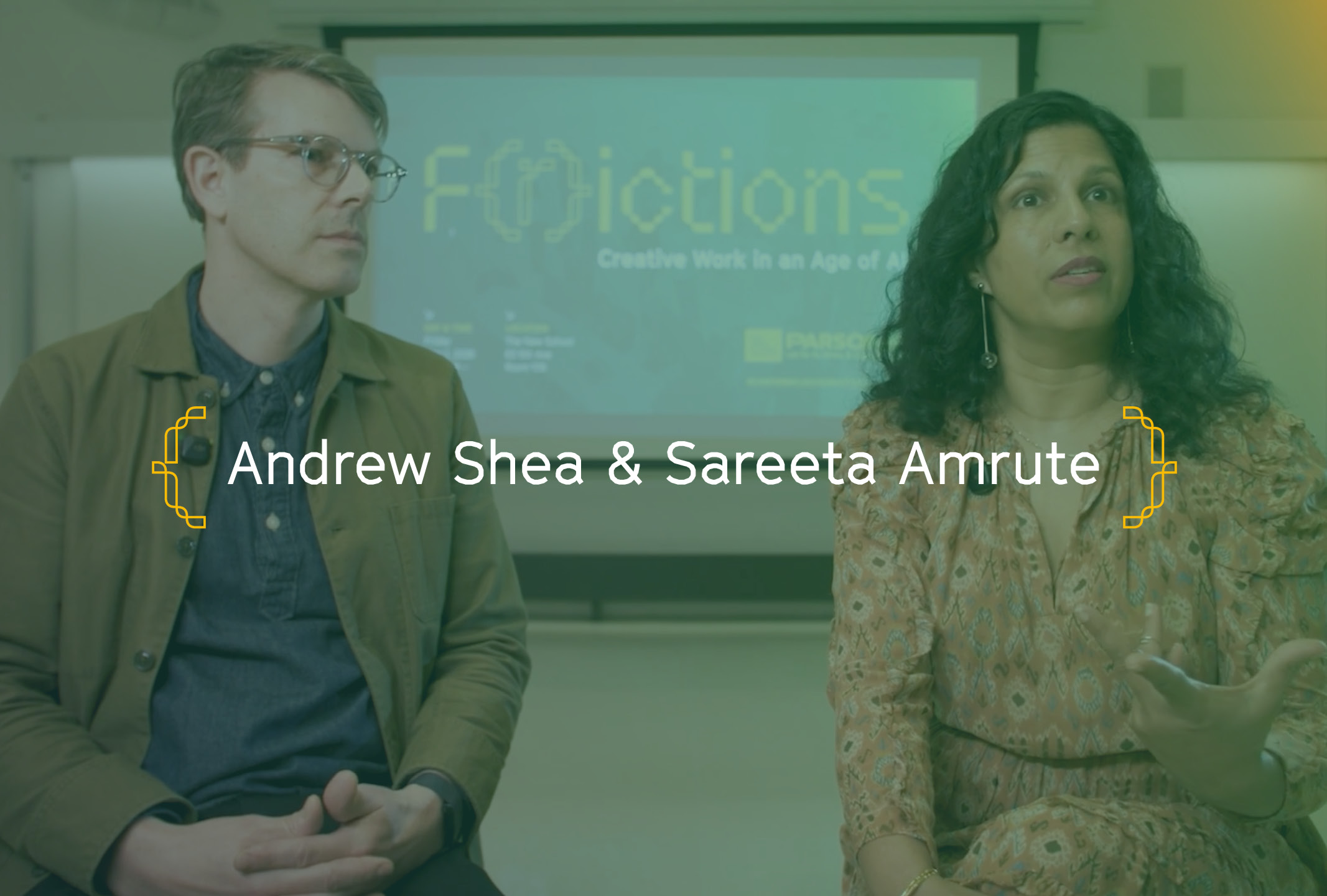
At F(r)ictions: Creative Work in an Age of AI, a recent symposium organized by The New School’s Lab for AI, Ethics and Creative Labor, artists and creatives along with lawyers and policymakers from a cross-section of fields came together to exchange notes on what creative work looks like in 2026. Andrew Shea and Sareeta Amrute, a designer and an anthropologist, respectively, founded the Lab in 2025 to better understand how AI will affect creative labor and how creative workers will innovate and respond to these changes.
Creative Careers on the Front Lines
The intention of F(r)ictions was to think and act across what has traditionally been conceived of as different art practices, from writing and acting to filmmaking and fashion modeling. During the symposium, panelists discussed how generative AI has changed creative work.
"Writers without independent wealth cannot fund their
own creative projects." Umair Kazi, Director of Policy,
The Authors Guild
Specific tasks that once took significant amounts of time, such as copyediting, designing layouts, color grading, and fit modeling, now take a fraction of the time. Umair Kazi, Director of Policy at The Authors Guild, pointed out that gig jobs like copywriting and marketing, which “in creative professions, you often pick up to generate income,” are disappearing. Without them, “writers without independent wealth cannot fund their own creative projects. This reinforces pre-existing socioeconomic and racial imbalances.” These ‘bread and butter jobs’, as Sara Ziff of Model Alliance termed them, are not particularly fun but sustain creative professionals financially and allow them to seek better-paying work.
Much of the creative material used to train these tools was used without permission. In a lawsuit against Anthropic, for example, disclosures have revealed massive piracy, with disclosures reporting that the company used approximately seven million pirated books as part of its training corpus.
Training, detection, and piracy are only part of the problem: increasingly, creative workers feel pressure to adopt AI tools while also worrying about being replaced by the very tools they pressure-test. For many, the chance to keep their work out of these models has already passed, because the models were trained on it years ago. Yet Aldo Juraidini, a graphic designer and a board member of the American Institute of Graphic Arts (AIGA) New York, is emphatic that a human designer's distinctive taste will never be replaced. “I don't think it's an existential crisis in the sense that it's going to remove the need for the designer. I have become convinced that designers will continue to play a role; you can see when creativity, taste, and talent are behind something versus when they aren't. AI can do a very good facsimile, but the difference is apparent to me.”
Umair Kazi sees the same thing in writing. He observes that there will always be “words that are uncanny—imperfections and stammerings of human speech that make it what it is.” But with the rise of AI in the world of writing, he says, “AI is making language flatter,” that is, more generic and less eccentrically human. With the compression of work timelines and shrinking opportunities, what creative work is worth is at stake. Taste only protects designers if the people paying for the work can see it, and as Aldo Juraidini reflected, non-creatives often determine much of what is valuable, and what is not, within creative fields. Artists have always had to balance creative impulse against marketability, but that used to be their call to make. Now technology companies are making that call for them.
"AI can do a very good facsimile, but the difference is
apparent to me." Aldo Juraidini, Board Member,
AIGA New York
Creative professions had problems long before AI. Poor working conditions, low rates of unionization, and the gig economy nature of creative work produce the familiar ‘struggling artist,’ but also make the work of organizing against AI much harder. When most creative workers are employed as independent contractors, without a common workplace or employer, opportunities to build collective solidarity are limited. The fragmented, precarious nature of creative labor makes it harder to organize collectively against a broader structural threat like AI. But as creative workers begin to see themselves more as workers at the frontiers of technological transformations that threaten their positions, how can more labor-centric frameworks be introduced in white-collar creative fields, where the dignity of creative labor is centered?
Creative AI in an Imperfect World
The emergence of AI has also forced many creative workers to confront uncomfortable realities about their fields: the industries they are trying to protect have long been marked by exclusion and inequality. Modeling, for instance, has been known to cultivate narrow and racialized beauty norms for the world. And in these imperfect creative industries, the unregulated introduction of AI further heightens these inequities. Sara Ziff, the founder and director of Model Alliance, recounted the case of the Taiwanese-American model Shereen Wu, whose images were doctored so she appeared more white, without her permission. The racial biases of the world get further sharpened when they’re reflected back in generative AI creative outputs. Ari Melenciano, a visual artist who experiments with generative AI to expohttps://cfda.com/news/the-impact-of-the-model-alliance/se its patterns, offers a striking example of how bias gets reproduced. When she typed the word "programmer" next to a headshot of herself, a Black woman, the AI altered it into a white man's. As Ari points out, even the substitution revealed the system's assumptions: demographically, it would have made more sense for the tool to generate an Indian face, given who actually works as a programmer globally. These tools operate with a veneer of universality, yet they often reproduce a narrow, dominant cultural order.
For the Model Alliance, the Shereen Wu case became a clear sign of the future and their lynchpin in the fight against technological manipulation in modeling. Model Alliance won landmark legislation that protects fashion workers from exploitation, wage theft, and the accelerated integration of artificial intelligence into the fashion industry. These struggles have raised important questions about the future of fashion as an industry, known, as Sara remarked, for “skinny young white women setting unrealistic beauty ideals.” But she believes something good could come of it, and it offers an opportunity to turn “the industry on its head in a way that is better for humanity.” So as AI changes creative industries—what should each field fight to hold on to, and what should it let go?
Creative Labor’s Unseen Global Reach
Part of the answer lies in a myth creative fields have long told about themselves—the myth of the singular genius. Since the Enlightenment, creative work and innovation have relied on narratives of the singular genius of the artist, the author, or the creator. But like any form of work, creative work also depends on an assembly line of labor which is never counted as creative or authorial. Alexandra Mateescu, a labor researcher at Data & Society, recounted her father’s story, who was a storyboard artist for television commercials. After 30 years of work in the advertising industry, as the industry went digital, when he tried to put together a portfolio of all that he had drawn, “it turned out that everything he produced in his 30-year career was the intellectual property of the clients.”
"It turned out that everything he produced in
his 30-year career was the intellectual
property of the clients." Alexandra Mateescu,
Data & Society
The collective work that creative works require is the hidden labor that keeps the creative world running, yet it quietly faces its most powerful threat, without protection. Mateescu posed a critical question about what really is counted as creative work and what isn't: if a large number of invisible creative workers never had control and ownership of their artistic work in the first place—works that were controlled by employers and platforms—what bargaining power can they wield in this moment to regulate the AI technologies that are being brought into their workplaces?
The collective nature of creative work spans globally and rests on wage differentials and exploitation, depending on where the work is executed. Mateescu argues that no two creatives are valued the same way, especially within the global political economy of creative production: “Clients take advantage of global wage differentials by paying an illustrator in the Philippines a fraction of what they would pay someone in the US, which puts these workers into competition with each other and can warp incentives in ways that reinforce global labor hierarchies.” Global hierarchies of creative labor have long underpinned fields such as visual effects, animation, and publishing, to name just a few.
The differentiated terrain of struggle for creative workers across the globe has led workers in other countries to organize around their own versions of the problem. For instance, Brazilian dubbing artists have been at the forefront of organizing against AI-driven redundancy in their work as Portuguese-language voice artists. They too occupy a lower position in the pecking order, dependent on international language work, specifically English-language movies and television shows, for their bread and butter. But they have leveraged their power as a sector and as agents of cultural sovereignty to build cross-sectoral and associational alliances in order to shape the public discourse on AI regulation. The Creative Labor and Critical Futures cluster has created a digital repository that includes cases like this one, where workers shaped how AI is used in their industries. These examples show that representing creative workers’ interests requires collaboration and collective demands for a seat at the table in AI governance.
Copyright was not Built for This
One legal mechanism that creative workers often turn to protect their work is copyright, a legal mechanism based on ownership of property. The United States Copyright Office protects human authorship. Materials generated by AI cannot be registered, though a work that combines both human and AI-generated materials can be registered for the human-made parts.
Andrew Foglia, from the United States Copyright Office, shared the scope and limitations of copyright for creatives. Companies often argue that copyright only applies when AI produces outputs that are “substantially similar” to another work. This is unsatisfying for creators who remain exposed, since copyright then often protects specific expression rather than style, even though, as Foglia notes, “style is made up of expressive choices”. What is more, observes Foglia, “creators find it unsatisfactory that their creative input is used to train a model that competes with them in the marketplace.” Though copyright instruments can help protect authors and artists as they try to maintain their ability to make a living through their work, the history of property protections and creative labor has not always been favorable to creators.
The case of sampling in music demonstrates this double-edged nature of copyright protections. After courts began requiring samples to be licensed in the early 1990s, for instance, record labels that had to pay for the rights to use protected music often pushed artists to use that material in recognizable ways, getting more value for their investments through this form of musical recognizability. This shows how copyright shaped the music itself, with unintended artistic consequences for creativity. At the same time, the question of who owns the copyright—creatives or publishers—will also directly affect who can exercise ownership rights and how those rights might, in some instances, prevent creativity rather than foster it. In the existential moment creators are currently in, copyright offers protections, yet these protections should be treated as an imperfect remedy.
Creators have Power Together
Bringing together creatives from distinct fields of practice revealed the importance of building alliances between creative industries motivated to respond to conditions in which their work is taken without permission, copied without consent, and monetized by generating new content without compensation.
"Obviously, the archive is an extraordinarily biased
place, but so is synthetic media.” Stephanie Jenkins,
Archival Producers Alliance
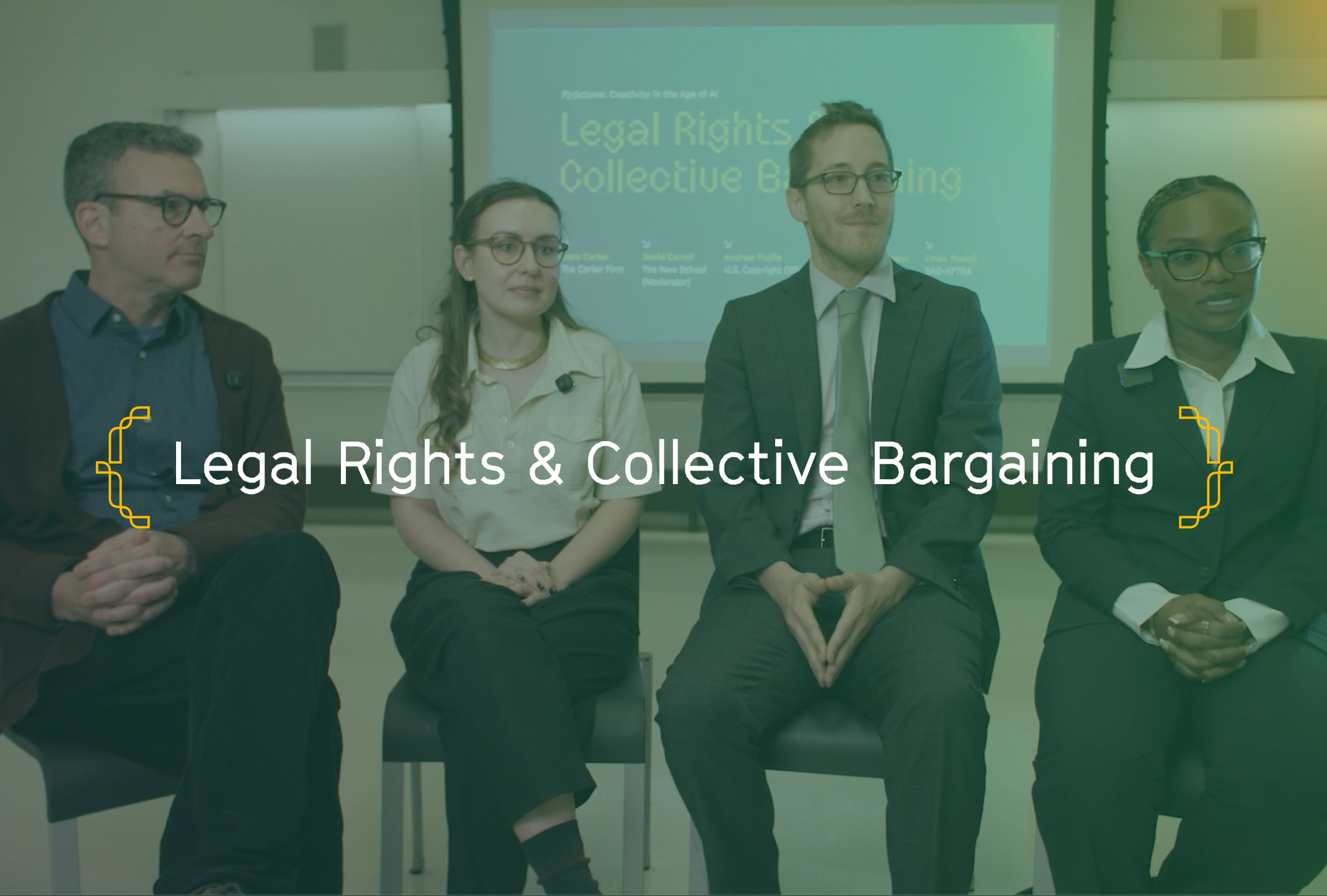
Such alliances can take many forms. First, some industries have worked to protect workers for years and can offer deep expertise in negotiating contracts and pushing for legislative reform. One of the most powerful unions for creative workers, SAG-AFTRA, negotiated a successor contract restricting the use of synthetics—digital assets created through artificial intelligence—in roles otherwise filled by humans, prioritizing human performances unless specific conditions are met. In New York, the Model Alliance won passage of the Fashion Workers Act, signed in December 2024 and in effect since June 2025, which requires a model’s explicit, separate written consent before a digital replica of them can be created or used, and mandates full disclosure of scope, duration, and compensation terms.
Second, alliances not only work to protect workers, but they may also safeguard widely shared human curiosity and the historical record. Stephanie Jenkins, a documentary filmmaker from the Archival Producers Alliance, described the toolkit the alliance built for documentary filmmakers and the problems synthetic media creates for historical archives. She made a poignant observation: “We’re working directly with archives to think about how synthetic media that seems real affects the historical record, our relationship with audiences, and our shared understanding of history. Obviously, the archive is an extraordinarily biased place, but so is synthetic media.” What is at stake, therefore, is the specificity of our own memories and experiences and the collective intelligence born of them. Finally, alliances can push for legislation, and recent laws show what that can produce: Tennessee’s ELVIS Act protects a performer’s voice and likeness from unauthorized AI imitation, and New York’s Synthetic Performer Disclosure Law requires advertisers to disclose when they use AI-generated performers.
Within such alliances, it is important to recognize that creative workers have both a long history of craft, with corresponding solidarity built through guilds and union structures, and a tradition of individual artistic production, often consciously divorced from craft production. One of the greatest hindrances to protecting creative workers may be this very divide, which keeps artists atomized and isolated from one another. AI tools could give workers without the resources of top models, celebrated authors, or Hollywood stars a way to make their own work. That will only happen if the system changes, because right now the benefit goes to the data companies that have taken those workers’ content, likenesses, and creativity without acknowledgment or consent. This moment might instead be used to reassess the historical divide between craft and auteur creation, between guild work and individualized creation, a divide that has kept workers separated. The time is ripe for coalitions that let creative workers unify and push for collective, global autonomy over what we value in creative work. A cross-field coalition can give them a collective say in how their work is valued and used.
To that end, the Lab for AI, Ethics and Creative Labor is bringing together unions, guilds, and associations across creative fields to join the Coalition for AI and Creative Labor—to collaborate and join forces in shaping the future of creative fields and professions.


Selected Works





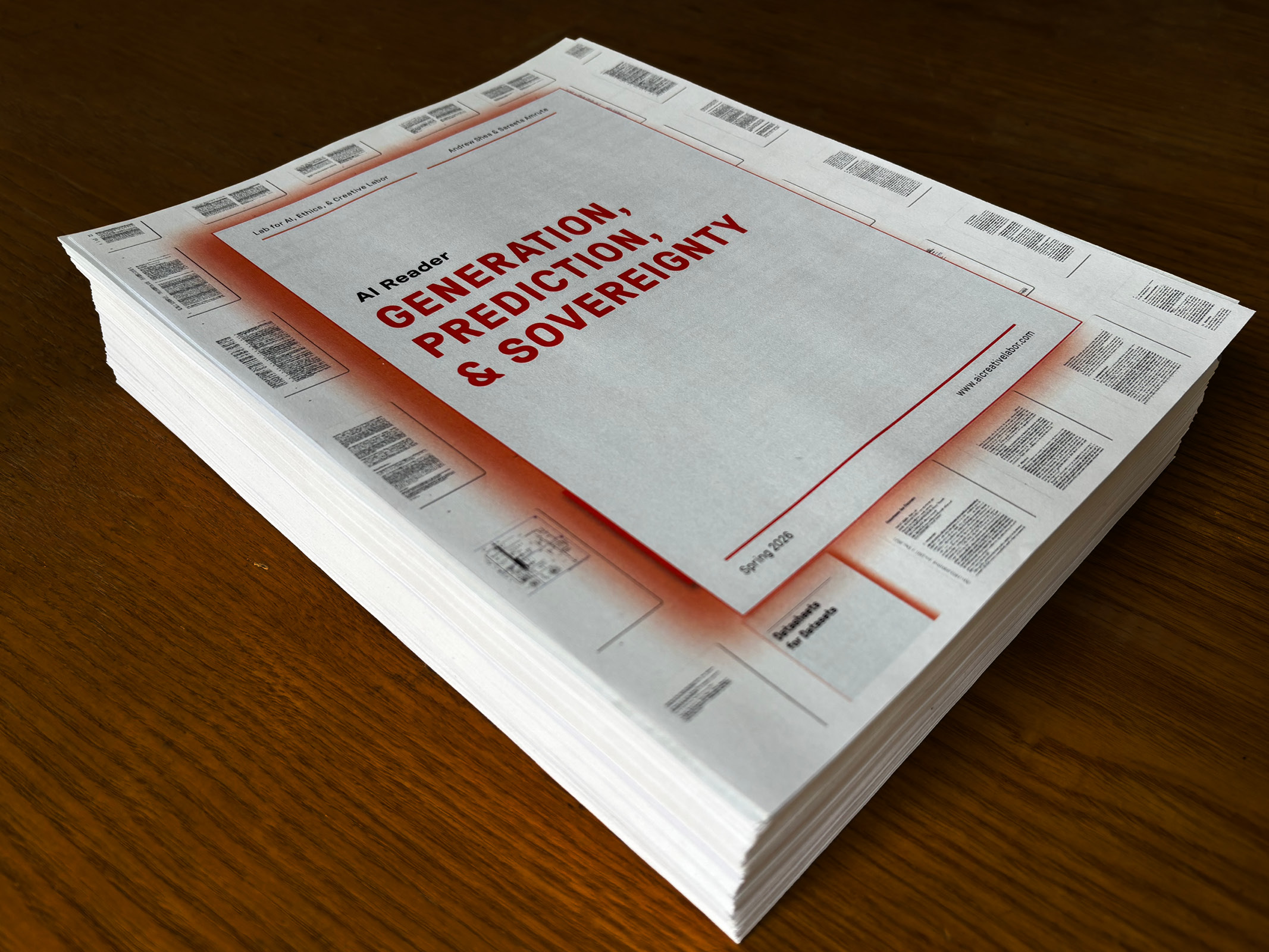
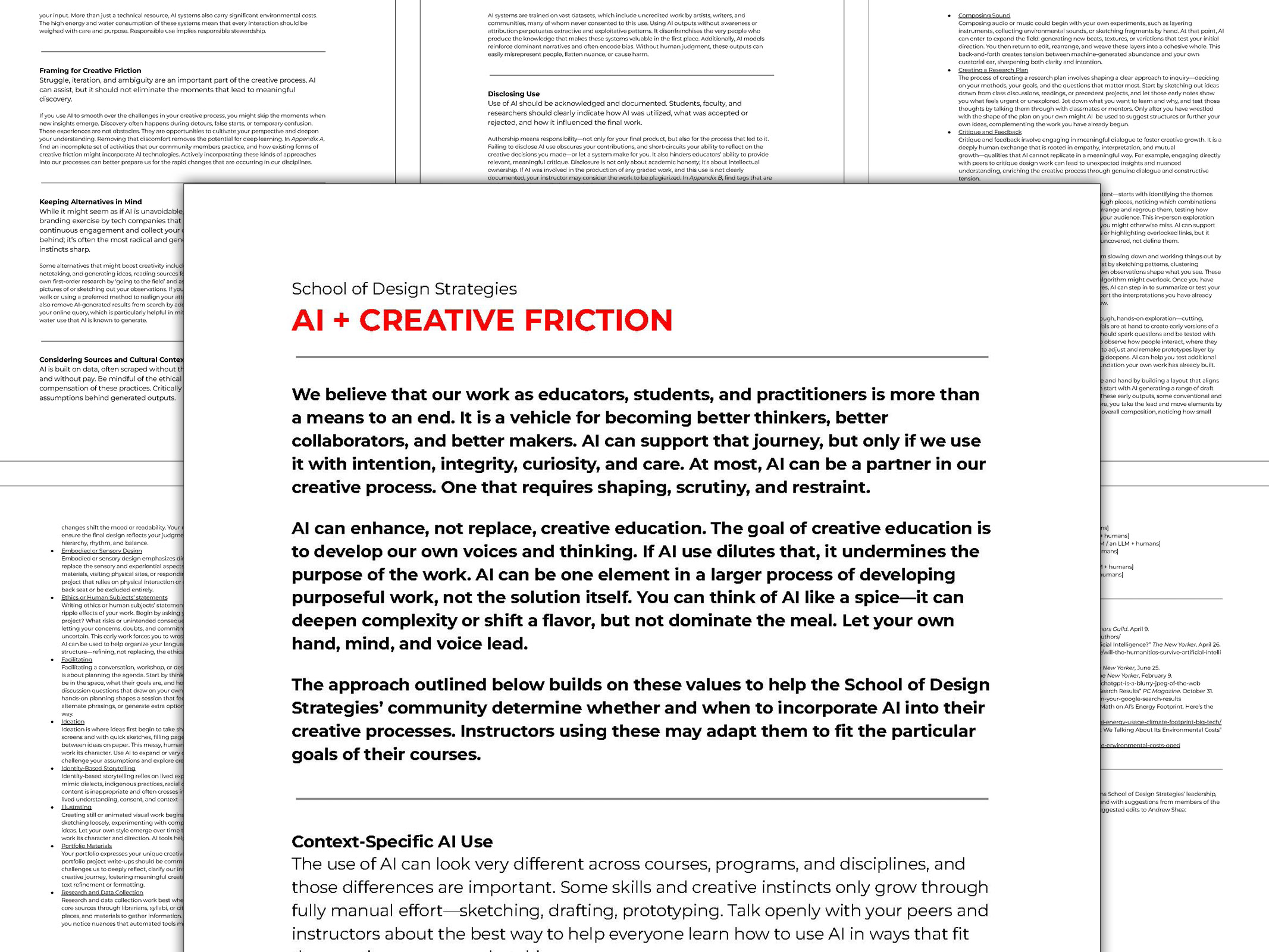
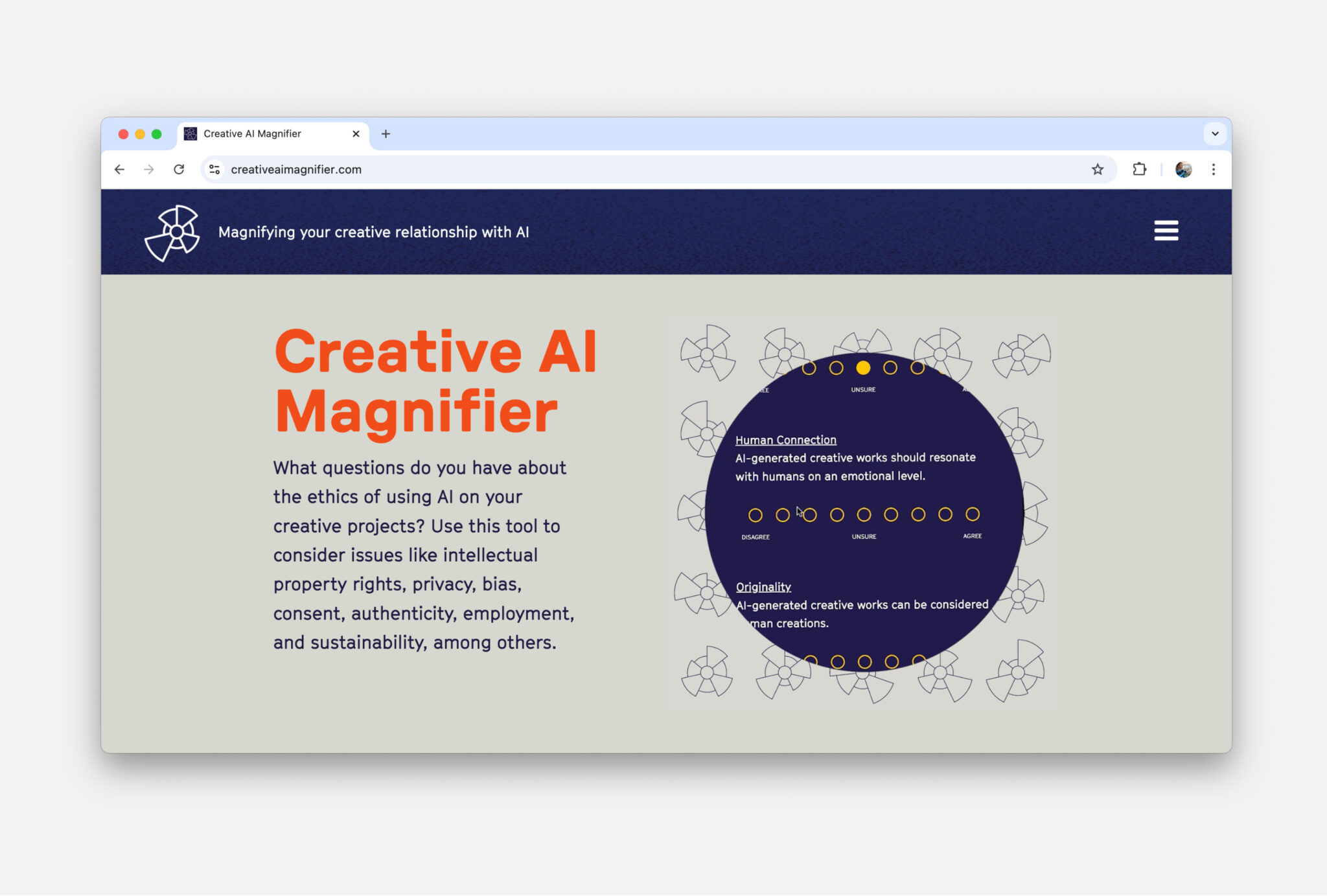
We investigate how AI transforms the conditions, politics, and value of creative work.
